
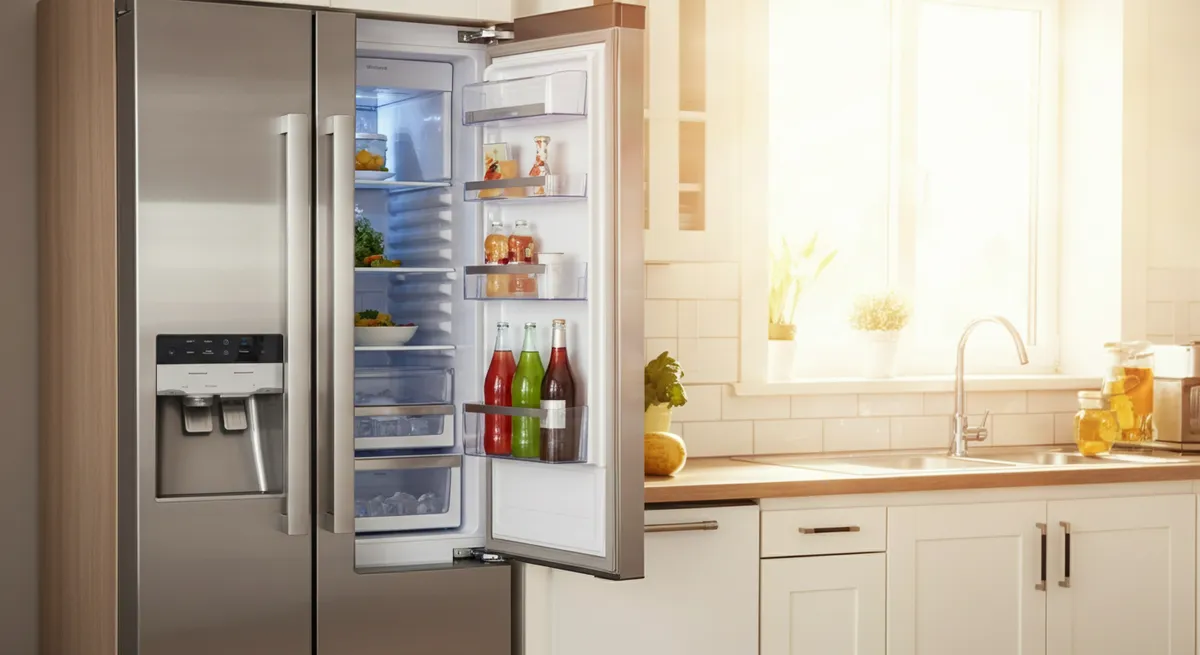
An unheated garage can become too cold for a refrigerator designed for indoor use. A refrigerator freezer combination still needs to run its cooling system to keep frozen food cold, even when the garage itself feels chilly.
Why the freezer can warm up
On models whose compressor operation responds mainly to the fresh food compartment, cold surrounding air can reduce the demand for cooling. The compressor then runs less often, and the freezer may warm enough for food to thaw.
The defrost heater has a different job. It melts frost from the cooling coil during a defrost cycle. It does not cool the freezer or substitute for compressor operation.
Use the range for your exact model
Find the model number and check the installation instructions for the permitted room temperature range. A garage ready label does not mean an appliance works at every winter temperature.
For example, GE specifies 38°F to 110°F for the garage ready top freezer models described in its support guide. GE also gives particular control settings for those models in colder conditions. Those settings and limits should not be applied to other refrigerators.
Measure the garage and both compartments
Check the garage temperature near the appliance, including overnight lows. Keep appliance thermometers in the refrigerator and freezer. The FDA recommends 40°F or below in the refrigerator and 0°F in the freezer.
If the garage falls outside the approved range, move the appliance to a suitable location or choose a model rated for the conditions it will actually experience. Use a garage accessory only when the manufacturer approves it for the exact model. An improvised heater or insulation wrap is not a substitute for that approval.
If the surrounding temperature is within the specified range but the appliance still cannot maintain temperature, record the readings and arrange a diagnosis.