
It’s a familiar summer frustration for homeowners across Mount Prospect and the greater Midwest: you toss a load of laundry in the dryer, come back an hour later, and the clothes are still damp. You run it again. And again. What used to take 45 minutes now seems to take the better part of an afternoon. You’re not imagining it — and your dryer probably isn’t broken. The culprit is something most people never think about: Midwest humidity.
In this post, we’ll explain exactly why humid summers make your dryer work harder, how moisture in your duct system creates a dangerous lint buildup, and what you can do about it — starting today.
Why Midwest Humidity Makes Drying Harder
Your dryer works by pulling moisture out of wet clothes and pushing that moisture-laden air out through the exhaust duct. It’s a simple process — but it depends heavily on one thing: the air inside the dryer needs to be able to absorb moisture from your clothes.
Here’s the problem. When the air outside your home is already thick with humidity — as it routinely is during an Illinois summer — the air your dryer pulls in is already partially saturated. Saturated air can’t absorb as much moisture from your clothes. That means each cycle of hot air does less work, and your dryer has to run longer and longer to get the job done.
Think of it like trying to dry a wet sponge by pressing it against another wet sponge. The physics just don’t work in your favor. On a dry winter day, your dryer might finish a load in 40 minutes. On a muggy July afternoon in Mount Prospect, that same load could take 70 minutes or more — even if everything else is working perfectly.
How Lint Clumps Faster in Damp Ducts
Humidity doesn’t just slow down the drying process — it actively damages your dryer’s exhaust system over time.
Every time your dryer runs, tiny fibers and lint particles travel through the exhaust duct along with the moist air. In dry conditions, most of this lint stays loose and gets pushed out through the exterior vent. But in humid conditions, moisture condenses inside the duct walls, and that moisture acts like glue. Lint sticks to the duct walls, layer by layer, building up into thick clumps that dramatically restrict airflow.
Restricted airflow means your dryer has to work even harder to push air through. The motor runs longer, the heating element cycles more frequently, and drying times balloon. What started as a humidity problem becomes a mechanical problem — and it compounds itself with every load you run.
This is especially common in homes with longer duct runs, flexible plastic ducts, or ducts that make multiple turns before reaching the exterior vent. Each bend is a place where lint can accumulate and moisture can pool.
The Fire Hazard: Why Clogged Dryer Vents Are Dangerous
This is the part we want every homeowner in Mount Prospect to read carefully.
Clogged dryer vents are one of the leading causes of house fires in the United States. According to the U.S. Fire Administration, dryers and washing machines cause an estimated 2,900 home fires each year, resulting in deaths, injuries, and millions of dollars in property damage. The leading cause? Failure to clean the dryer vent.
Here’s why it’s so dangerous: lint is highly flammable. When lint builds up in your exhaust duct and restricts airflow, heat has nowhere to go. Temperatures inside the duct and dryer cabinet rise to dangerous levels. All it takes is one spark or one moment of excessive heat, and that accumulated lint can ignite.
The warning signs are easy to miss — longer drying times, a dryer that feels unusually hot to the touch, a burning smell during operation, or a vent flap that doesn’t open fully. If you’ve noticed any of these, please don’t wait. This is a safety issue, not just an inconvenience.
Take it seriously. Your family’s safety depends on it.
Homeowner Tips You Can Do Today
The good news: there are several things you can do right now to improve your dryer’s performance and reduce fire risk.
Clean the Lint Screen Before or After Every Load
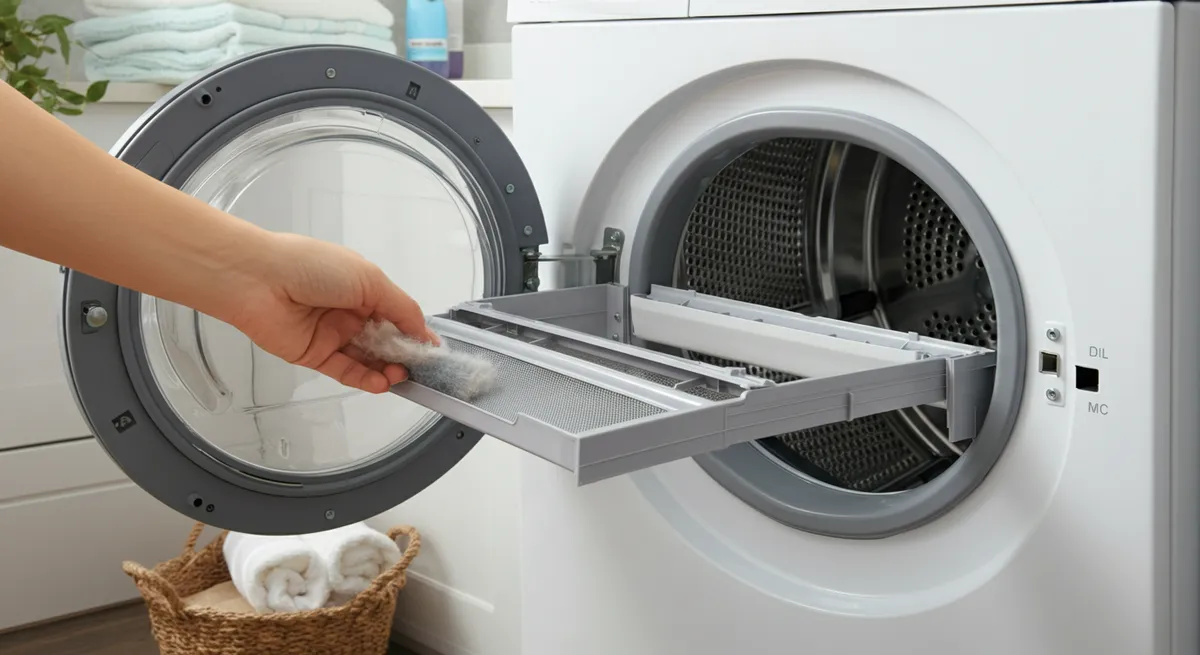
This is the single easiest thing you can do. A clogged lint screen restricts airflow immediately and forces your dryer to work harder from the very first minute of a cycle. Make it a habit — every single load, without exception. If you notice the screen has a waxy film (often from dryer sheets), wash it with warm soapy water and a soft brush, then let it dry completely before reinstalling.
Use a Dryer Vent Brush Kit to Clean the Duct
You can purchase a flexible dryer vent brush kit at most hardware stores for around $20–$30. Disconnect the dryer from the wall, detach the duct, and use the brush to scrub out lint buildup from inside the duct. Work from both ends if possible. Do this at least once a year — more often if you do heavy laundry loads or have a longer duct run.
Vacuum Out the Exterior Vent Flap
Go outside and find where your dryer exhausts to the exterior of your home. You’ll see a vent cover, usually with a flap or louvers. Use a vacuum with a hose attachment to clear out any lint, debris, or even bird nests that may have accumulated there. A blocked exterior vent is just as dangerous as a blocked interior duct.
Check That the Exterior Vent Flap Opens Freely
With the dryer running, go outside and watch the vent flap. It should open fully and you should feel a strong rush of warm air. If the flap barely moves, or if airflow feels weak, you likely have a significant blockage somewhere in the duct system. This needs to be addressed immediately.
When to Call a Professional
DIY maintenance goes a long way, but there are situations where you really need a professional’s help.
Call a pro if:
- Your duct run is long (more than 15–20 feet) or makes multiple 90-degree turns — these are nearly impossible to clean thoroughly with a standard brush kit.
- You have flexible plastic or foil accordion-style ducts, which are prone to sagging, kinking, and trapping lint. A professional can replace these with rigid metal duct, which is far safer and more efficient.
- Your dryer still runs slow after you’ve cleaned the lint screen and duct — there may be a mechanical issue with the heating element, thermostat, or motor that requires diagnosis.
- You notice a burning smell, excessive heat, or any other sign that something isn’t right.
Attempting to diagnose internal dryer problems without the right tools and training can make things worse — or dangerous. When in doubt, call someone who knows dryers inside and out.
We’re Here to Help — Right Here in Mount Prospect
At Mount Prospect Appliance Repair, we’ve helped hundreds of homeowners across Mount Prospect and the surrounding Midwest communities get their dryers running safely and efficiently again. Whether you need a professional dryer vent cleaning, a full dryer inspection, or a repair for a heating element or motor issue, our experienced technicians are ready to help.
We know the unique challenges that Illinois summers bring — the humidity, the lint buildup, the longer drying times — and we know how to fix them. Don’t wait until a slow dryer becomes a dangerous one.
Contact Mount Prospect Appliance Repair today to schedule your dryer vent cleaning or service appointment. We’re proud to serve Mount Prospect, Illinois and the surrounding Midwest community — your neighbors, your trusted repair team.