
Troubleshooting July 19, 2026

Why Is My Air Conditioner Blowing Warm Air, Freezing Up, or Struggling with Weak Airflow?

By Mount Prospect Appliance Repair Team

Why Is My Air Conditioner Blowing Warm Air, Freezing Up, or Struggling with Weak Airflow?

When your air conditioner starts acting up in the middle of a hot Illinois summer, it can feel like a crisis. Whether it’s blowing warm air when you need cool relief, icing over like a freezer, or barely pushing any air through your vents, these problems are frustrating — and they can get worse fast if left unaddressed. At Mount Prospect Appliance Repair, we help homeowners throughout the Mount Prospect area diagnose and fix AC issues quickly and affordably. In this post, we’ll walk you through the three most common air conditioner symptoms, what’s likely causing them, and what you can do about it.

The Three Most Common AC Symptoms

Most AC complaints fall into one of three categories. Understanding which symptom you’re dealing with is the first step toward getting your system back on track.

Blowing Warm Air

You set the thermostat to 68°F, hear the system kick on, and then feel a rush of warm — or even hot — air coming through the vents. This is one of the most common and immediately noticeable AC problems. It’s also one that homeowners often try to ignore, hoping it will resolve on its own. It rarely does. When your AC is blowing warm air, the system is running but failing to actually cool the air before circulating it. This can happen for several reasons, ranging from a simple thermostat setting error to a more serious refrigerant issue.

Weak or Reduced Airflow

Sometimes the air coming out of your vents feels cool enough, but there’s just not much of it. Rooms take forever to reach the set temperature, some areas of the house feel stuffy, and the system seems to run constantly without ever quite catching up. Weak airflow is a sign that something is restricting the movement of air through your system — and over time, it puts extra strain on your AC unit, potentially leading to more serious (and expensive) damage.

Freezing Up (Ice on the Unit)

If you’ve ever walked past your indoor air handler or outdoor condenser and noticed a layer of frost or ice forming on the unit, you’re not imagining things — and it’s definitely not a good sign. A frozen AC unit is a paradox: the system designed to cool your home is getting too cold itself. Ice buildup restricts airflow even further, reduces cooling efficiency, and can eventually cause the compressor to fail — one of the most costly AC repairs there is. If you see ice on your unit, turn the system off and let it thaw before running it again, then call a professional.

What’s Causing These Problems?

While AC systems are complex, the vast majority of warm air, weak airflow, and freezing issues trace back to just a handful of root causes. Here’s what’s most likely going on.

Dirty Indoor Air Filters

The air filter in your HVAC system is your first line of defense against dust, pollen, pet dander, and other airborne particles. But when that filter gets clogged — which can happen in as little as 30 days in a busy household — it becomes a barrier that restricts airflow throughout the entire system. Reduced airflow means the evaporator coil can’t absorb heat properly, which causes it to get too cold and freeze over. It also means your blower fan has to work harder to push air through, reducing the volume of air reaching your vents. A dirty filter is the single most common cause of AC problems, and it’s also the easiest to fix.

Clogged Exterior Condenser Coils

Your outdoor condenser unit works by releasing the heat absorbed from inside your home into the outside air. To do this efficiently, the condenser coils need to be clean and unobstructed. Over time — especially during spring and summer — pollen, grass clippings, cottonwood fluff, dirt, and debris accumulate on the coil fins, forming an insulating layer that traps heat. When the condenser can’t release heat effectively, the refrigerant doesn’t cool down properly, and the system struggles to deliver cold air indoors. In severe cases, the system can overheat and shut down entirely. Regular cleaning of the condenser unit is a simple maintenance step that makes a big difference.

Low Refrigerant

Refrigerant is the lifeblood of your air conditioning system — it’s the substance that actually absorbs heat from the air inside your home and carries it outside. If your system has a refrigerant leak, the level drops below what’s needed for efficient operation. Low refrigerant causes the evaporator coil to get too cold (leading to freezing), reduces the system’s ability to cool the air (leading to warm air from the vents), and forces the compressor to work harder than it should. Unlike a dirty filter, low refrigerant is not a DIY fix. Refrigerant handling requires EPA certification, and simply topping off the refrigerant without finding and repairing the leak is only a temporary solution. If you suspect a refrigerant issue, it’s time to call a professional.

What Homeowners Can Do

There are several practical steps you can take to prevent and address common AC problems before they escalate.

Inspect and replace your air filter monthly. This is the single most impactful thing you can do for your AC system. Check the filter every 30 days — hold it up to the light, and if you can’t see light through it, replace it. Use a filter with the correct MERV rating for your system (check your owner’s manual), and keep a few spares on hand so you’re never caught without one. During peak cooling season, some households may need to replace filters even more frequently.

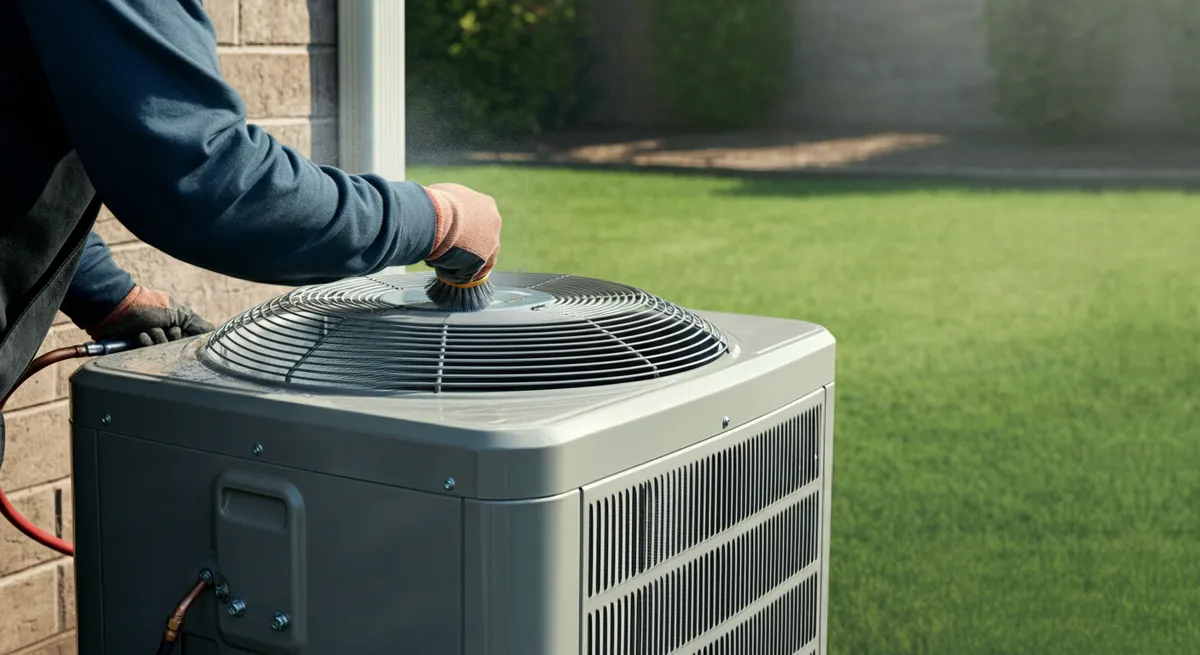
Hose off the exterior condenser unit. Once or twice a season, turn off power to the outdoor unit and use a garden hose to gently rinse the condenser coils from the inside out (or top to bottom). This removes accumulated pollen, dirt, and debris that reduce efficiency. Avoid using a pressure washer, as the high pressure can bend the delicate aluminum fins. You can also trim back any vegetation growing within two feet of the unit to ensure adequate airflow around it.

Know when to call a professional. Some AC problems are beyond DIY fixes. If you’ve replaced the filter and cleaned the condenser but your system is still blowing warm air, freezing up, or producing weak airflow, there’s likely a deeper issue at play — a refrigerant leak, a failing compressor, a malfunctioning expansion valve, or an electrical problem. Attempting to diagnose or repair these issues without the proper training and tools can make things worse and void your warranty. When in doubt, call a certified HVAC technician.

Call Mount Prospect Appliance Repair

When your air conditioner isn’t performing the way it should, don’t sweat it out — call the team that Mount Prospect homeowners trust. Mount Prospect Appliance Repair has years of experience diagnosing and repairing all makes and models of air conditioning systems. Whether you’re dealing with warm air, a frozen unit, sluggish airflow, or something you just can’t quite put your finger on, our certified technicians will get to the bottom of it fast. We pride ourselves on honest assessments, transparent pricing, and repairs done right the first time. We’re local, we’re reliable, and we’re ready to help. Contact Mount Prospect Appliance Repair today to schedule your AC service appointment — and get back to staying cool all summer long.