
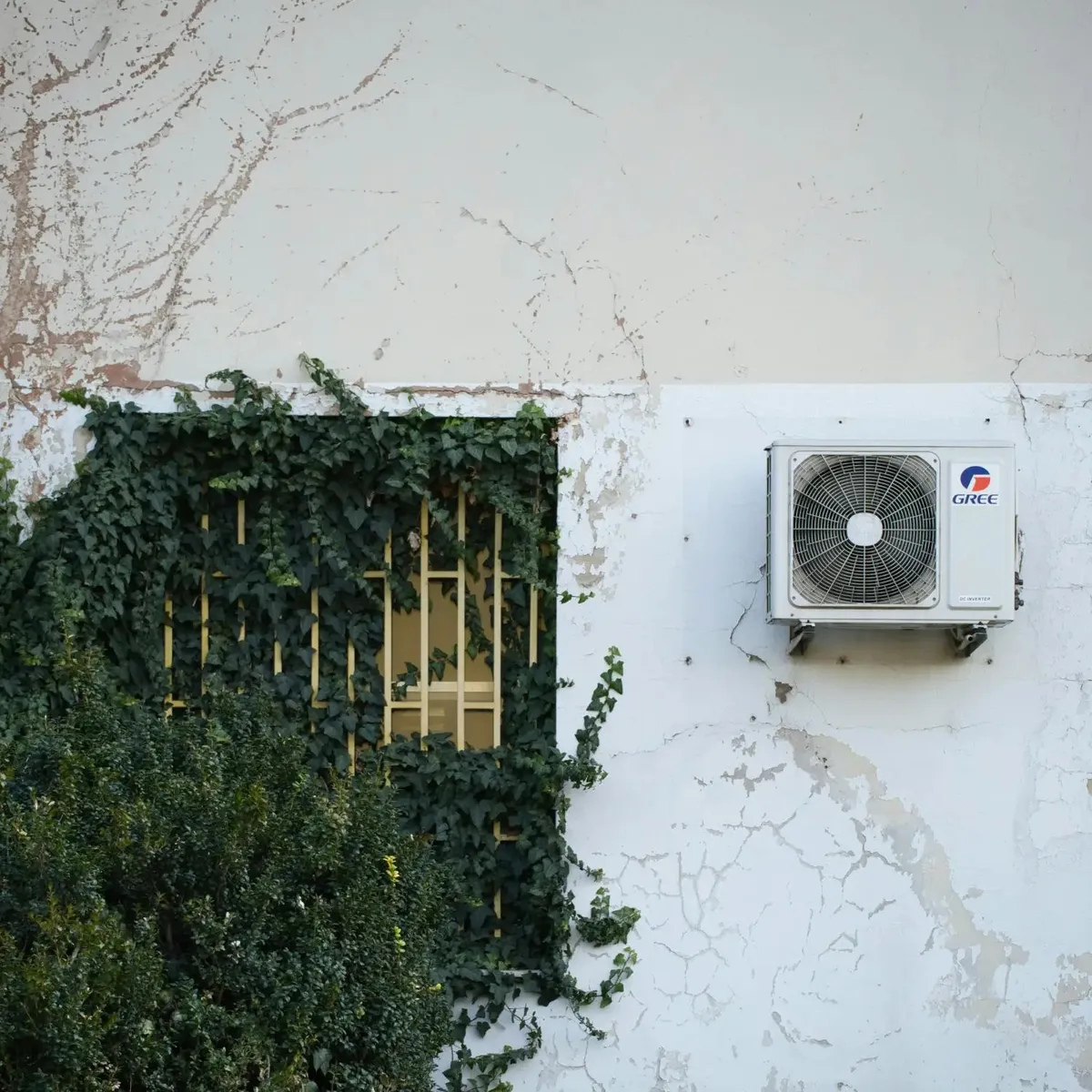
A warm day is a useful time to check whether your air conditioner can cool the house before you need it every afternoon. Start with the controls, filter and space around the outdoor unit.
Check the filter and outdoor airflow
With the system off, inspect the filter and replace or clean it as its instructions require. Match the specified size and filter type, and follow the airflow arrow when fitting a replacement. A more restrictive filter is not automatically a suitable upgrade.
Clear loose leaves and vegetation from around the outdoor unit. Keep the clearance specified by the manufacturer. Carrier’s maintenance guide explains how debris restricts airflow and separates routine filter care from work on coils, electrical connections and refrigerant.
Try the cooling setting
When outdoor conditions are within the equipment’s operating range, select cooling and set the thermostat below the room temperature. Check that supply vents are open and unobstructed. Give the system time to respond to any built in startup delay before changing settings again.
Notice whether air is moving, whether it becomes cooler and whether the room temperature starts moving toward the setting. Record an error message or unusual sound. These observations help an HVAC contractor understand the symptom.
Arrange service for a persistent fault
If cooling does not start, airflow remains weak or ice appears on the equipment, contact an HVAC contractor. A sound alone cannot confirm a failed capacitor or compressor, and a repair price requires a diagnosis.
For a rental home, report the observations to the owner or property manager so the person responsible for the equipment can arrange access and approve the visit.