
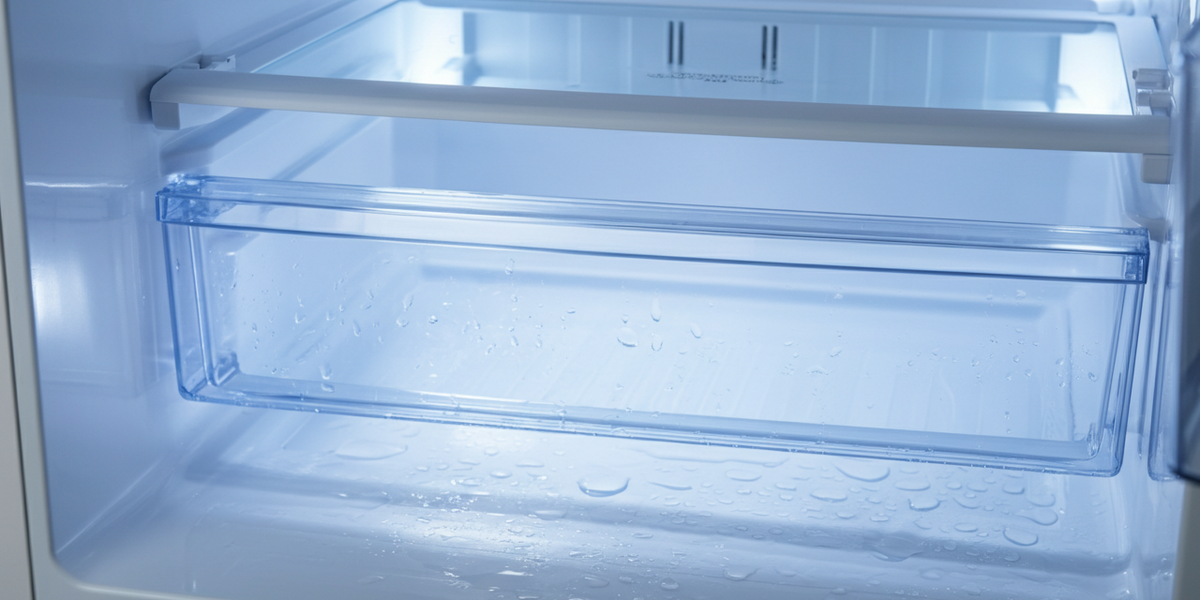
Finding a puddle of water pooling under your crisper drawers is one of those refrigerator problems that seems mysterious at first — but you’re definitely not alone. This is one of the most common refrigerator complaints homeowners in Mount Prospect face, and the good news is that it’s usually caused by something identifiable and fixable. Whether it’s a simple clog or a worn-out seal, understanding the root cause is the first step toward a dry, properly functioning fridge.
In this guide, we’ll walk you through the most likely culprits, how to diagnose the issue yourself, and what you can do to fix it — plus when it’s time to call in a professional.
Common Causes of Water Pooling Under the Crisper Drawers
There are several reasons water might be collecting at the bottom of your refrigerator. Here are the most common ones:
Clogged Defrost Drain
This is the number one cause of water under the crisper drawers. Your refrigerator has a defrost cycle that melts frost off the evaporator coils. That meltwater is supposed to flow down a drain tube and into a drip pan beneath the fridge. If that drain becomes clogged with food debris, ice, or mold, the water has nowhere to go — and it ends up pooling at the bottom of your refrigerator compartment.
Frozen or Blocked Drain Tube
Even if the drain itself isn’t clogged, the drain tube that carries water away can freeze solid, especially if the refrigerator temperature is set too low or if there’s a problem with the defrost heater. A frozen tube produces the same result: standing water under the drawers.
Damaged or Worn Door Gasket
The rubber gasket that seals your refrigerator door keeps warm, humid air from entering the compartment. When that seal is cracked, torn, or simply worn out, warm air sneaks in and condenses on the cold interior surfaces. Over time, that condensation drips down and collects under the crisper drawers.
Unlevel Refrigerator
Refrigerators are designed to sit at a very slight backward tilt so that the doors swing shut naturally and water drains properly toward the back. If your fridge is tilted forward or sitting unevenly, water from condensation or the defrost cycle may pool toward the front — right where your crisper drawers sit.
Ice Maker Issues
If your refrigerator has an ice maker, a loose water line connection, a cracked fill tube, or a malfunctioning inlet valve can cause water to drip into the fresh food compartment. This water often travels down to the bottom of the fridge, mimicking the appearance of a drain problem.
How to Diagnose the Problem
Before you start any repairs, take a few minutes to narrow down the cause. Here’s a simple diagnostic process:
- Remove the crisper drawers and dry the area completely. This gives you a clean baseline to work from.
- Inspect the drain hole at the back of the refrigerator compartment. It’s usually located at the center-rear of the floor. If you see ice buildup or debris around it, a clogged or frozen drain is likely your culprit.
- Check the door gasket. Run your fingers along the entire seal and look for cracks, tears, or areas where the gasket pulls away from the door. You can also close the door on a piece of paper — if it slides out easily, the seal isn’t tight enough.
- Use a level to check the refrigerator’s tilt. Place a bubble level on the floor of the fridge. It should be level side-to-side and very slightly tilted back (front legs slightly higher than rear).
- Inspect the ice maker and water lines (if applicable). Look for any visible drips, frost buildup around the fill tube, or moisture on the water line connections at the back of the unit.
- Monitor where the water reappears. After drying the area, check back in 12–24 hours. The location and rate of water return can help confirm your diagnosis.
DIY Fixes You Can Try
Once you’ve identified the likely cause, here are some safe, practical fixes you can attempt at home:
- Clear a clogged defrost drain: Use a turkey baster or a small funnel to flush the drain hole with warm water. You can also use a pipe cleaner or a thin flexible brush to dislodge debris. Avoid sharp objects that could damage the drain.
- Thaw a frozen drain tube: Unplug the refrigerator and allow it to defrost naturally for 24–48 hours with the doors open. Alternatively, use a hair dryer on a low setting to carefully melt ice around the drain area — never use an open flame.
- Replace a worn door gasket: Replacement gaskets are available online for most refrigerator models. They typically snap or screw into place and can be swapped out with basic tools. Make sure to order the correct part number for your model.
- Level the refrigerator: Adjust the front leveling legs (usually found at the bottom front corners) by turning them clockwise to raise or counterclockwise to lower. Most refrigerators need the front to be about a quarter-inch higher than the rear.
- Tighten ice maker connections: If you notice a loose water line at the back of the fridge, carefully tighten the fitting by hand. If the fill tube is cracked or the inlet valve is dripping, those parts can often be replaced as a DIY project with the right replacement components.
When to Call a Professional
Some refrigerator leaks are straightforward to fix — but others signal a deeper problem that’s best left to a trained technician. Consider calling a professional if:
- The defrost drain keeps refreezing shortly after you clear it, which may indicate a failing defrost heater or thermostat
- You notice frost buildup on the back wall of the refrigerator compartment, suggesting an issue with the defrost system
- The leak persists even after you’ve addressed the obvious causes
- You suspect a refrigerant leak (signs include the fridge not cooling properly alongside the water issue)
- The ice maker requires component replacement beyond a simple line tightening
- You’re not comfortable working around electrical components or water lines
Attempting complex repairs without the right tools or experience can sometimes make the problem worse — or create new ones. When in doubt, it’s always smarter and safer to get a professional opinion.
If you’re dealing with a stubborn refrigerator leak in the Mount Prospect area, the team at Mount Prospect Appliance Repair is here to help. Our experienced technicians can quickly diagnose the problem, explain your options clearly, and get your refrigerator running like new — without the guesswork. Give us a call or reach out online to schedule a convenient appointment. We’re proud to serve homeowners throughout Mount Prospect and the surrounding communities with honest, reliable appliance repair service.